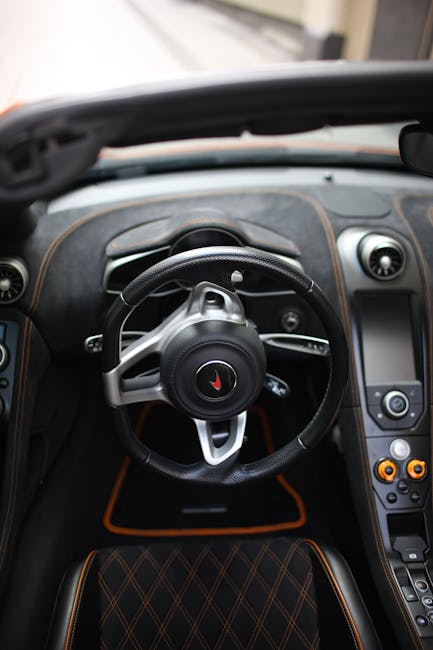
Sim Racing Rig Vs Cockpit
Introduction to Sim Racing Setups
Sim racing has surged in popularity over recent years, becoming a mainstream hobby that combines the thrill of racing with advanced technology and realism. As the hardware associated with sim racing continues to evolve, the terminology surrounding it also becomes crucial for enthusiasts and newcomers alike. Understanding the difference between a “sim racing rig” and a “sim racing cockpit” is vital when choosing the right setup for your needs.
Despite their similarities, the terms often spark confusion, which can influence buying decisions. This article aims to clarify these terms, offering insights into what each entails, their strengths and weaknesses, and who should consider which option.
What Is a Sim Racing Rig?
A sim racing rig is a broad term that generally refers to the entire setup that sim racers use, encompassing various components. The flexibility of the term “rig” allows for a range of definitions within the sim racing community.
Typical Components
– Frame: The structural base that holds everything together.
– Mounts: Supports for wheels, pedals, and other accessories.
– Seat: Often optional; can be a dedicated racing seat or a standard chair.
DIY Rigs vs Pre-built Rigs
– DIY Rigs: These allow for custom builds tailored to individual preferences. They can be constructed from various materials like aluminum profiles, steel tubing, or even wood.
– Pre-built Rigs: Ready-made solutions that simplify the setup process, appealing to those who prefer convenience.
What Is a Sim Racing Cockpit?
A sim racing cockpit represents a more specific and immersive type of setup. It typically includes an integrated racing seat and is designed to provide a fixed driving position.
Cockpit as a Complete Solution
– Integrated Seat: Most cockpits come with a racing seat that is essential for comfort and support during long sessions.
– Fixed Driving Position: Designed to replicate real-world racing setups, offering a more authentic experience.
Common Cockpit Styles
– GT Style: Mimics the seating position found in GT cars.
– Formula Style: Emulates the low, reclined position of Formula cars.
– Hybrid Style: Combines elements from both GT and Formula designs.
Commercial Brands and Ecosystems
Many brands offer complete cockpit solutions, creating an ecosystem of compatible products that enhance the sim racing experience.
Key Conceptual Difference: Rig vs Cockpit
The primary distinction between a sim racing rig and a cockpit lies in their structure and intended use.
“Rig” as a Broad, Modular Term
A rig can be highly customizable and modular, allowing users to modify and expand their setups as needed.
“Cockpit” as a More Immersive Structure
In contrast, a cockpit is designed for immersion, providing a more comprehensive racing experience. Manufacturers often use these terms interchangeably in marketing, which can add to the confusion.
Build Style and Customization
One of the most significant differences between rigs and cockpits is the level of customization.
Modularity and Expandability
– Sim Racing Rigs: Highly modular, allowing users to swap components like seats and mounts easily.
– Cockpits: Often come as a complete unit with limited modification options.
Custom Seat Choices vs Pre-mounted Seats
Rigs often allow for personalized seat selections, while cockpits typically have fixed seating configurations.
Accessory Compatibility
Both setups can accommodate various accessories, but the level of compatibility may vary, particularly with motion systems and button boxes.
Stability and Performance
The structural integrity of each type of setup can significantly affect performance.
Structural Rigidity Comparison
– Sim Racing Rigs: Generally built for stability, but can vary depending on the materials used.
– Cockpits: Often designed to handle high-torque direct drive wheelbases effectively.
Pedal Flex and Load Cell Performance
Rigs tend to offer more flexibility in pedal setups, while cockpits might limit the performance of load cell pedals.
Ergonomics and Driving Position
The driving position is crucial for comfort and performance during long racing sessions.
Adjustability of Seating and Controls
– Rigs typically offer more adjustability in terms of seating position and pedal angle.
– Cockpits may have fixed positions that best simulate real-world racing environments.
Long-session Comfort
– Rigs: Can be tailored for comfort, but may require additional investments in ergonomic solutions.
– Cockpits: Usually prioritize comfort and support, reducing fatigue during extended use.
Space Requirements and Installation
Space considerations play a significant role in choosing between a rig and a cockpit.
Footprint Size Comparison
– Rigs: Can be compact or expansive, depending on the design and user preferences.
– Cockpits: Often have a larger footprint due to integrated features.
Permanent vs Semi-permanent Installation
Cockpits are typically more permanent installations, while rigs can be moved or adjusted more easily.
Compatibility With Sim Racing Hardware
Both setups need to be compatible with various sim racing hardware.
Wheelbase and Pedal Compatibility
Both rigs and cockpits support a range of wheelbases, but high-end setups may perform better on more rigid platforms.
Accessory Mounting
The ability to mount various accessories can differ significantly between these setups, impacting user experience.
Price Range and Value
Cost is an essential factor in deciding between a rig and a cockpit.
Cost Spectrum
– Sim Racing Rigs: Range widely in price, depending on components and materials.
– Sim Racing Cockpits: Generally have a higher initial cost due to the integrated nature.
Long-term Value
Rigs may offer better long-term value due to their modularity and upgrade potential.
Upgrade Path and Future-Proofing
The ability to upgrade is crucial for sim racers looking to enhance their experience over time.
Ease of Upgrading a Rig
Rigs can be upgraded incrementally, allowing for a more tailored experience.
Monitor Upgrades
Both setups can accommodate monitor upgrades, but the installation might differ based on the design.
Pros and Cons Breakdown
Sim Racing Rig – Advantages and Disadvantages
Advantages: – Highly customizable and modular
– Potential for upgrades over time
– Typically more affordable options available
Disadvantages: – Can require more setup time
– May lack the immersive experience of a cockpit
Sim Racing Cockpit – Advantages and Disadvantages
Advantages: – Offers a complete, ready-to-use solution
– Designed for comfort and immersion
– Fixed position mimics real racing environments
Disadvantages: – Less customizable
– Higher initial investment
Who Should Choose a Sim Racing Rig?
– DIY enthusiasts and those who enjoy building their setups
– Sim racers looking to frequently upgrade their components
– Users with dedicated sim racing rooms where space isn’t a concern
– Competitive racers who require specific adjustments
Who Should Choose a Sim Racing Cockpit?
– Beginners seeking a plug-and-play solution
– Users prioritizing comfort and immersive experiences
– Casual racers or console players with limited setup time
Sim Racing Rig vs Cockpit: Comparison Table
| Feature | Sim Racing Rig | Sim Racing Cockpit |
|———————–|————————-|—————————|
| Customization | High | Limited |
| Stability | Moderate to High | High |
| Comfort | Variable | High |
| Space Usage | Flexible | Larger |
| Price and Upgrade Potential | Variable | Higher initial cost |
Frequently Asked Questions (FAQ)
Is a sim racing rig better than a cockpit?
This depends on personal preference, budget, and intended use. Rigs offer more customization, while cockpits provide immersion.
Are aluminum profile rigs considered cockpits?
Not necessarily. Aluminum profile rigs are typically categorized as rigs unless they integrate a full cockpit structure.
Which is better for direct drive wheels?
Cockpits often provide better stability for high-torque direct drive wheels, but a sturdy rig can also work well.
Can beginners start with a rig?
Yes, but a cockpit may be more suitable for those seeking an easier setup.
Final Verdict: Rig or Cockpit?
In summary, the choice between a sim racing rig and a cockpit ultimately depends on your experience level, budget, and personal preferences. A rig offers flexibility and modularity, making it ideal for those wanting to customize their setups. Conversely, a cockpit provides a complete solution for users prioritizing comfort and immersion.
Consider your space, performance needs, and future upgrade plans when making your decision. Whether you choose a rig or a cockpit, both can lead to an exhilarating sim racing experience.

My name is Michael “Mick” Carter, and I’m a dedicated sim racing enthusiast with a deep love for motorsport. I first discovered sim racing in 2015 when a friend introduced me to a Logitech G27 and Assetto Corsa—an experience that immediately hooked me. Since then, I’ve gone from basic gear to advanced direct drive setups, VR headsets, and custom racing rigs, constantly refining my driving technique and equipment.
I mainly race in iRacing, ACC, and rFactor 2, focusing on GT3 endurance and open-wheel events. I’m not a professional driver—I’m simply someone who enjoys the craft of racing: learning car behavior, improving lap times, and battling for position with respect and skill.
I share what I’ve learned so others can build setups they enjoy and grow their own passion for sim racing. For me, the joy is in improving, one race at a time.
Owner at SimRacingCockpits.Com