Why Beginners Should NOT Buy Expensive Gear First
Why Beginners Should NOT Buy Expensive Sim Racing Gear First
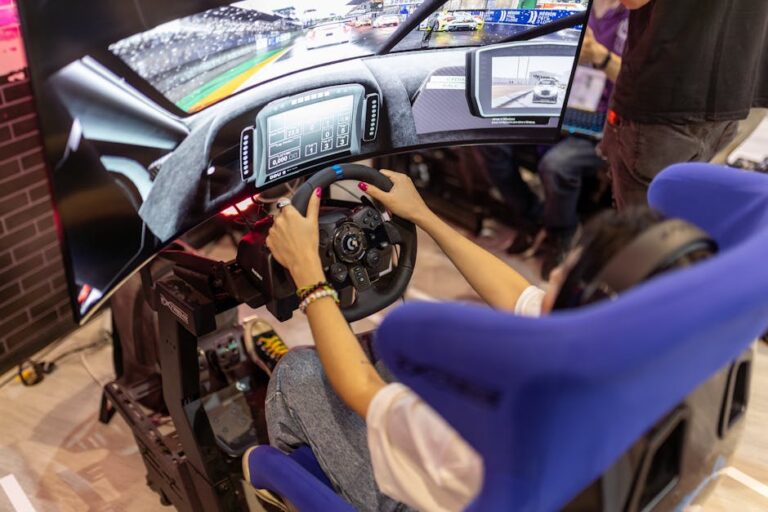
When I first discovered sim racing, I was tempted to jump straight into the most expensive setup possible—direct drive wheel, hydraulic pedals, aluminum rig, triple monitors. It looked elite, professional, and incredibly immersive. But after years in the hobby, I strongly believe beginners should not start with high-end gear. Here’s why.
Expensive Gear Does Not Make You Faster
Many new racers think better hardware equals better lap times. But skill, consistency, and racing fundamentals matter more than torque or metal pedals.
What actually improves your pace:
- Learning racing lines
- Understanding braking points
- Developing throttle control
- Building racecraft and awareness
- Practicing regularly
A $300 setup can teach all of this just as effectively as a $1,500 one.
You Don’t Yet Know What You Like
Sim racing has many categories:
- GT3 racing
- Formula cars
- Rally
- Drifting
- Oval racing
- Endurance events
If you buy expensive gear before understanding your preferences, you may end up with equipment that doesn’t suit your style.
Beginner Wheels Are More Forgiving
Direct-drive wheels are powerful—too powerful for some beginners. A more modest belt-drive or gear-drive wheel makes early learning easier.
You’ll Appreciate Upgrades More
Starting small and upgrading slowly lets you feel a noticeable improvement each time. This makes the journey much more rewarding.
It Saves You From Wasting Money
Many people try sim racing, spend big, and quit within months. Starting cheap prevents costly regret.
What You SHOULD Buy First
- Logitech G29/G920 or Thrustmaster T150/TMX
- Stable desk or affordable wheel stand
- One racing game (Assetto Corsa, GT7, iRacing, etc.)
Once you have skill and experience, then consider upgrading.
Final Thoughts
Sim racing is a journey. Master the fundamentals first, enjoy the hobby, and only buy expensive gear when you truly know what direction you want to go. It’s not the hardware that makes you a better driver—it’s practice, patience, and passion.

My name is Michael “Mick” Carter, and I’m a dedicated sim racing enthusiast with a deep love for motorsport. I first discovered sim racing in 2015 when a friend introduced me to a Logitech G27 and Assetto Corsa—an experience that immediately hooked me. Since then, I’ve gone from basic gear to advanced direct drive setups, VR headsets, and custom racing rigs, constantly refining my driving technique and equipment.
I mainly race in iRacing, ACC, and rFactor 2, focusing on GT3 endurance and open-wheel events. I’m not a professional driver—I’m simply someone who enjoys the craft of racing: learning car behavior, improving lap times, and battling for position with respect and skill.
I share what I’ve learned so others can build setups they enjoy and grow their own passion for sim racing. For me, the joy is in improving, one race at a time.
Owner at SimRacingCockpits.Com